
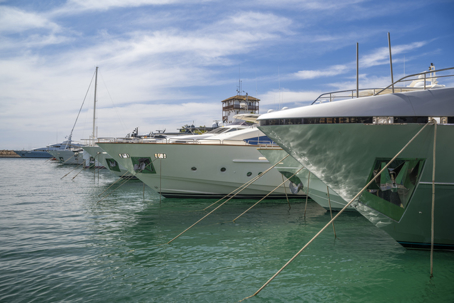
If you own a yacht and you're going through a divorce, you already know that dividing assets won't be simple. A yacht isn't like a savings account with a clear dollar amount. Its value depends on many factors, and both sides in a high-net-worth divorce will likely want different numbers. Understanding how yacht valuation works gives you a clearer picture of what to expect — and helps you make informed decisions during property division.
If you have questions about how a yacht or other complex assets may be handled in your divorce, don't wait to reach out. Contact us through our online contact form or call (619) 330-0938 to schedule a complimentary strategy session.
Why a Yacht Is Harder to Value Than Most Assets
A home or a stock portfolio has straightforward pricing tools. A yacht does not. The market for yachts is smaller, less predictable, and highly dependent on condition, age, and demand at a given moment.
Two yachts of the same make and year can have very different values based on how they've been maintained. One well-kept vessel with upgraded equipment could be worth significantly more than a comparable boat in poor condition.
What Is Fair Market Value — and Why It Matters
"Fair market value" is a legal term used in property division. It refers to the price a willing buyer would pay a willing seller when neither is being pressured. This number is the starting point for dividing a yacht fairly in a divorce.
The fair market value isn't always what you paid for it, and it's rarely what you think it's worth based on sentimental attachment. The court relies on objective methods and qualified professionals to reach this number.
Who Determines What a Yacht Is Worth
Yacht valuation is typically done by a marine surveyor — a trained professional who physically inspects the vessel and prepares a written report of its condition and value. This is different from an appraiser of real estate or personal property; a marine surveyor has knowledge specific to boats and watercraft.
In a high-net-worth divorce, each spouse may hire their own marine surveyor, and their numbers can differ. When that happens, attorneys and the court may rely on additional evidence to determine the most accurate value.
The Key Factors That Affect a Yacht's Value
Marine surveyors and courts consider a wide range of factors when reaching a valuation. Here are the main elements that can raise or lower a yacht's assessed worth:
- Age and make of the vessel: Newer yachts from well-regarded manufacturers generally hold value better than older or lesser-known models.
- Current physical condition: Hull integrity, engine health, and overall upkeep are closely examined during an in-person survey.
- Recent upgrades or improvements: Navigation systems, safety equipment, and interior renovations can add to the value — but only if properly documented.
- Comparable sales: Surveyors look at what similar yachts have recently sold for in the current market, much like a real estate agent uses "comps."
- Operating costs and outstanding expenses: Unpaid marina fees, needed repairs, or large upcoming maintenance can lower the net value.
- Whether the yacht generates income: If the vessel has been used as a charter boat — meaning people paid to rent or use it — that income stream may factor into valuation.
These factors are weighed together to arrive at a final number. No single element automatically determines the value, which is why professional inspection is so important.
Is the Yacht Community Property or Separate Property?
In California, the law generally divides marital property — called community property — equally between spouses. But not everything automatically qualifies as community property. A yacht could be considered separate property if one spouse owned it before the marriage or received it as a gift or inheritance, as long as it was kept separate and not mixed with marital funds.
This distinction matters enormously in a high-net-worth divorce. If the yacht was purchased during the marriage using joint income, it is almost certainly community property. If it were a premarital asset, the spouse who owned it may have a strong argument for keeping it — but they'll need to show clear documentation proving its separate nature.
What Happens When the Yacht Has a Loan Against It
Many yachts are financed, meaning a lender has a claim on the vessel. In that case, the court looks at the equity — that is, the fair market value minus what is still owed on the loan.
For example, if the yacht is valued at $800,000 and there is a $300,000 loan balance, the equity is $500,000. That equity is what gets divided, not the full value of the boat. It's also worth noting that both spouses may have some responsibility for the remaining loan, depending on how it was structured.
Can One Spouse Keep the Yacht and "Buy Out" the Other?
Yes, this is a common approach when one spouse wants to hold onto the yacht. The spouse who wants to keep it would compensate the other spouse for their share of the equity, either through a cash payment or by giving up another asset of equal value — such as a portion of a retirement account or a piece of real estate.
This kind of arrangement requires careful calculation and clear documentation. Both parties need to agree on the value, or the court will need to make that determination.
Other Complications That Can Arise
High-net-worth divorce often involves assets that are interconnected, and yachts are no different. Here are situations that can add layers of complexity to the valuation process:
- The yacht is owned through a business entity, such as an LLC, making it harder to determine which portion belongs to the marriage.
- One spouse claims they used separate property funds for upgrades or purchase, creating a dispute about how much of the yacht's value is truly marital.
- There are disagreements about the current condition of the yacht, particularly if one spouse has been the one managing or maintaining it.
- The yacht has depreciated significantly since purchase, and both sides dispute the most recent fair market value.
Each of these issues can turn a straightforward valuation into a contested legal matter. Having clear legal guidance from the start helps prevent these situations from derailing your case.
Practical Steps to Take Right Now
If you're headed toward a divorce and a yacht is among your assets, taking early action protects your interests. You'll want to gather all documentation related to the vessel — purchase records, loan documents, maintenance logs, receipts for upgrades, and any charter agreements if the yacht was rented out.
It's also wise to avoid making any changes to the yacht's condition or selling it before the divorce is finalized. Courts take a dim view of any action that appears to reduce the value of a shared asset during divorce proceedings.
Your Next Step in a San Diego High-Net-Worth Divorce
Property division in a high-net-worth divorce is rarely simple, and a yacht adds a unique layer of complexity that requires both legal knowledge and access to the right professionals. At Shorb & Connor LLP, we work with clients in San Diego who are navigating divorces that involve significant and complex assets like yachts, real estate portfolios, and business interests.
We take the time to understand what matters to you and help you build a clear picture of your situation so you can make decisions with confidence. Whether you're trying to hold onto the yacht or make sure you receive fair value for your share, we are here to walk you through every step.
To schedule a complimentary strategy session with a San Diego divorce attorney, fill out our online contact form or call us directly at (619) 330-0938.