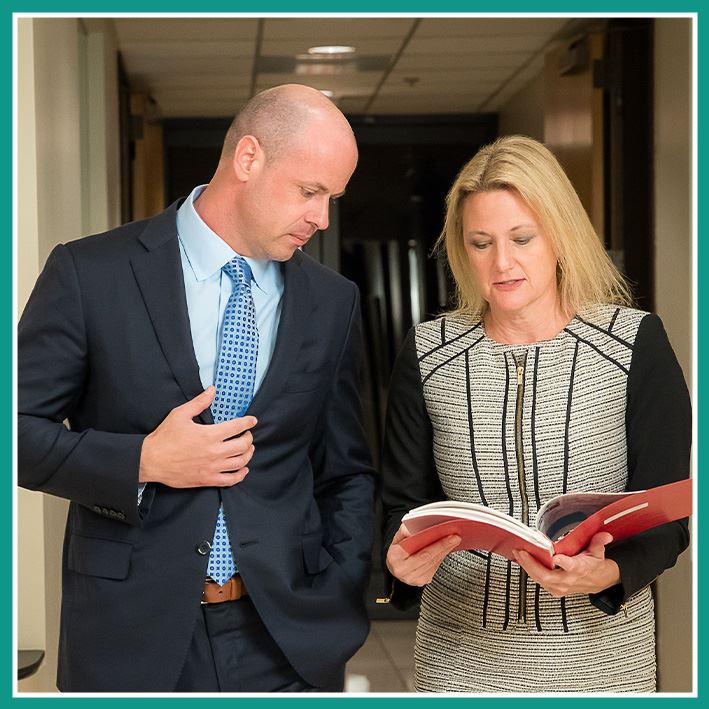

What You Can Expect with Us
Experience the Difference With Shorb & Connor LLP
Our team is here to help you get the results you need with a team you can trust.
-
Compassionate Representation
Our family law firm is dedicated to providing compassionate support. We understand that family law matters are deeply personal, and we are here to listen and offer empathetic guidance every step of the way.
-
Strategic FocusWe offer a comprehensive strategy for your case, not just a checklist of deadlines and steps. Our goal is to provide a clear, actionable roadmap that aligns with your objectives and leads to the best possible outcomes.
-
Work Directly With Your AttorneyFrom the moment you contact us, you will speak directly with an attorney. This ensures that your concerns are immediately addressed by a knowledgeable professional, setting the stage for effective representation.
-
Personalized Goal SettingWe believe in a collaborative process. By sitting down with you, we identify your objectives and outline a clear plan and strategy to achieve them, providing you with a sense of direction and control.
-
Free ConsultationsInitial consultations are free of charge, providing an opportunity to discuss your case with an attorney without financial obligation.
-
Holistic Approach to Family LawWe understand the myriad of factors that can impact your case and have the experience to address them all comprehensively.

California & Federal Law in a Military Divorce
Military divorce is more procedurally complex than a civilian divorce because state and federal law both apply. California is a community property state, meaning assets acquired during the marriage are generally subject to division. That includes military retirement pay. The filing state’s laws govern property division, support, and custody, so the choice of where to file carries real consequences.
California generally requires at least six months of state residency and three months of county residency before filing for divorce. For service members, military assignment can satisfy these residency requirements, meaning someone stationed in San Diego County can typically qualify to file here even if California isn’t their official home of record. Serving divorce papers on a deployed or overseas service member requires compliance with both California procedural rules and applicable federal law, a layer many civilian attorneys aren’t accustomed to navigating.
The Servicemembers Civil Relief Act (SCRA) allows an active duty service member to request a stay of divorce proceedings while on active duty. The initial stay is typically at least 90 days. Proceedings can’t be delayed indefinitely, but the SCRA does affect how and when a case moves forward, and that timing has to be accounted for from the outset.
Military Retirement, TRICARE & Benefits Division in San Diego County Divorces
The division of military retirement is often the most financially significant issue in a military divorce. The Uniformed Services Former Spouses’ Protection Act (USFSPA) allows California courts to treat military retirement pay as community property subject to division, up to 50% of the service member’s disposable retired pay.
A common misconception is that spouses must be married for at least 10 years before the pension is divisible. That’s not accurate. The 10/10 rule determines only whether the Defense Finance and Accounting Service pays the former spouse directly. It says nothing about whether the pension itself can be divided. Courts can divide a military pension after any length of marriage that overlaps with qualifying service years.
Health coverage and other benefits also require deliberate planning:
- 20/20/20 Rule: A former spouse qualifies for full military benefits, including medical, commissary, and exchange privileges, if the marriage lasted at least 20 years, the service member completed at least 20 creditable service years, and at least 20 of those years overlapped with the marriage.
- 20/20/15 Rule: If the overlap between service years and the marriage is at least 15 years but less than 20, the former spouse receives transitional medical benefits only.
- Continued Health Care Benefit Program (CHCBP): Former spouses who don’t qualify under either rule may be able to purchase continued health coverage through CHCBP.
- Survivor Benefit Plan (SBP): The SBP provides continued income to a surviving former spouse if the service member dies. How it’s addressed in a settlement requires careful planning, particularly around who bears the cost of premiums.
Child Custody, Support & Spousal Support When Military Duties Are a Factor
California courts decide child custody based on the best interests of the child, but they also account for the realities of military service. Deployments, permanent change of station orders, and the demands of active duty all affect how a parenting plan is structured. A temporary custody modification may be entered during a deployment, but California courts don’t treat deployment alone as a permanent change in circumstances that would justify a lasting modification once the service member returns.
Parenting plans in military families should address how visitation works during deployments, how parents communicate with a child while a parent is overseas, and how PCS-related relocations are handled before they happen rather than after.
Support calculations in California include more than base pay. Basic Allowance for Housing (BAH), Basic Allowance for Subsistence (BAS), and special pays such as hazard pay are all factored into the income calculation for both child support and spousal support. California law caps the combined total of child support and spousal support at 60% of the service member’s pay and benefits. Support orders should be drafted with enough flexibility to remain workable as pay changes due to rank, deployment status, or a transition from active duty to reserve status.
Schedule a Complimentary Strategy Session
Military divorce involves enough moving parts that a clear plan from the outset makes a genuine difference. At Shorb & Connor LLP, prospective clients in San Diego County can schedule a complimentary strategy session to walk through their specific situation, understand what California and federal law mean for their case, and leave with a concrete sense of what comes next.
You’ll speak directly with a partner attorney, not a staff member. We work with service members, veterans, and military spouses across San Diego County, and we’re ready to help you build a case plan that fits your life and your timeline.
Call (619) 330-0938 or contact Shorb & Connor LLP online to schedule your complimentary strategy session today.